

Teddy Roosevelt Was More Than A Conservationist
The modern portrayal of Roosevelt fails to contain his multitudes.
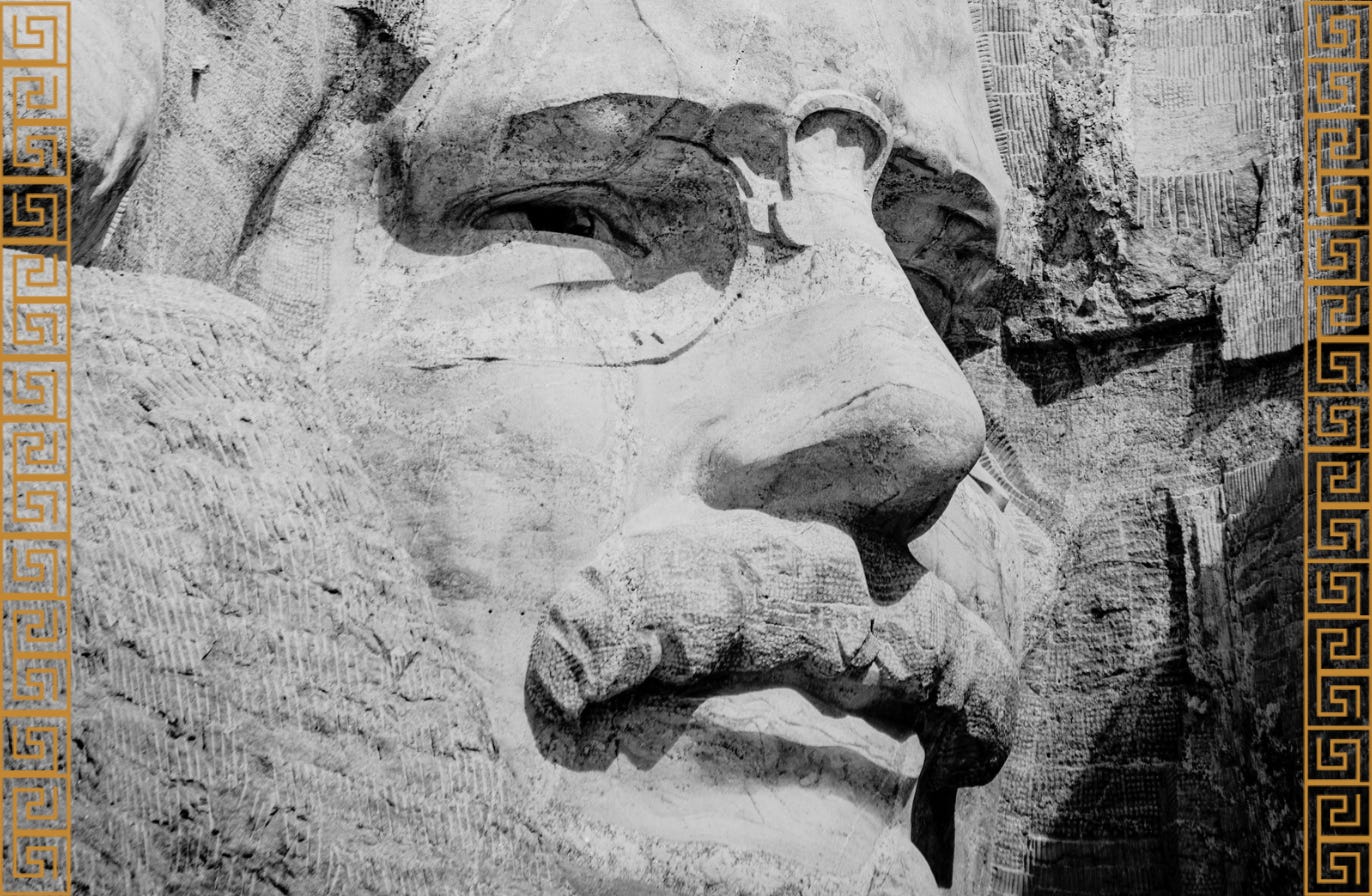

If Washington is the Founder of the Republic, and Lincoln the preserver of the Republic, then Theodore Roosevelt was the restorer of the Republic.
For many years, especially during the Tea Party surge of the late 2000s and early 2010s, Theodore was derided for costing the Republican Party the 1912 election and dismissed as a big-government statist, hostile to liberty and business alike.
But as the tides of politics have shifted from Tea Party to Trumpian policy, the conservative historiography of our leaders has developed in a peculiar direction. Today, Roosevelt’s legacy is in resurgence among the right, for some of the right reasons – but something is still missing.
While it’s true that his position on the protective tariff, his big-stick foreign policy, and his trust-busting are all closer to the mainline Republican tradition today than they were just over a decade ago, one issue above all else has been popularized: Theodore Roosevelt’s conservationist policies. The legacy of Roosevelt’s conservation, as the man who set aside 230 million acres of public land, is celebrated freely, proudly, and quoted often, particularly by those on the left who claim that conservatives are wrongfully claiming Roosevelt as their own
This view is incomplete to the point of distortion.
Roosevelt was a moral crusader, a warrior, and a conservationist as much as he was an economic nationalist, a trustbuster, a labor advocate, and a systematic opponent of concentrated private and public power. He wielded the power of his positions in New York and D.C. as a weapon against the corporate interests and public corruption of his era with a ferocity that would make modern politicians blush. The conservation legacy is real, but it is also the least threatening part of his record to the contemporary donor and governing class, which is a large part of why it gets the most airtime.
Conservatives who forget the rest of Roosevelt are not just undermining his role in genuine statesmanship and policy. They are also undermining themselves.
Roosevelt’s Legacy
The legacy of Theodore Roosevelt is one of great national renewal. Born in 1858 and passing in 1919, Roosevelt’s life spanned the recovery and discovery of America’s domestic and international power. Arriving three years before America tore itself apart in a war that put brother against brother – with the Roosevelt family likewise divided, as his own mother was from Roswell, Georgia – and dying two months after America entered into its role of global leadership upon the end of World War I. Roosevelt was the central figure in restoring America after the destruction of the gruesome Civil War and developing the character necessary for America’s forthcoming position as a world leader.
Writing years later, Roosevelt framed his action in San Juan Hill as proof that the Civil War’s wounds had, in a meaningful sense, closed.
“All—Easterners and Westerners, Northerners and Southerners, officers and men, cow-boys and college graduates, wherever they came from, and whatever their social position—possessed in common the traits of hardihood and a thirst for adventure. They were to a man born adventurers, in the old sense of the word.”
The United States saw the acts of bravery and leadership for what they were. Coming out of San Juan Hill, Roosevelt was propelled to stardom across our Republic that hadn’t been seen since U.S. Grant’s own rise. After returning from Cuba, Roosevelt would find himself the Governor of New York within three months, the Vice President within a year and a half, and President within nearly three years.
The same courage that gained him the fame that he wielded at San Juan was the same courage that it took to confront Tammany Hall and Washington, D.C. The same character that drove him up that hill drove him to break up Standard Oil, stand down corruption, and reshape the relationship between the American government and workers. And yes, to save 230 million acres of land. These are not separate men.
The “Useful” Roosevelt
What is not useful to many commentators, organizations, or individuals is the true, rugged, and multi-dimensional Roosevelt, the one who believed in more than just national parks. He was quite brash, unapologetically American, and held beliefs that today would be offensive to the left and the right. Many have embraced this “useful” Roosevelt precisely because he fits neatly within their lines. In doing so, they strip him of his power and his legacy. We can neither pretend that Roosevelt was a “Subaru owning” liberal conservationist, who tacks on perfectly to America’s contemporary interpretation of Progressive, nor a pure-American right-winger whose every instinct can be cherry-picked to validate whichever fight the right is having this week.
Both portraits are convenient, but both are wrong. And both flatten a man whose actual convictions cut across the lines our current politics has drawn from him.
That is what the conservationist framing misses. It mistakes the symptom for the diagnosis. Roosevelt set aside 230 million acres because he believed the land belonged to the American people and not to the private interests that would devour it. The same logic that protected Yellowstone broke Standard Oil. The same instinct that preserved the wilderness for future generations fought to preserve the republic from capture by the powerful few. You cannot separate the conservationist from the trustbuster, because they share the same root: a conviction that the common inheritance of the American people must be defended aggressively, against those with the power and appetite to consume it.
The conservationist framing is not wrong; it is simply safe. It costs nothing. It offends no donor, threatens no interest, and demands nothing of the politician who invokes it beyond a vague commitment to the outdoors. It is Roosevelt as aesthetic, not Roosevelt as a statesman. And for a political movement that has spent the better part of four decades making its peace with concentrated corporate power, a Roosevelt reduced to national parks and hunting trips is quite convenient.
Conservatives who invoke Roosevelt’s love of the land while ignoring his war on concentrated power are not honoring his legacy. They are domesticating it. And a domesticated Roosevelt is of no use to a political movement that claims to speak for the American worker, the American family, and the American future. The full Roosevelt is the useful one. What we should aspire for is scholars who truly know Roosevelt as a man who fought his entire life to restore, grow, and keep our Republic. It is time to claim him whole.
David Carlson is a Strategist at Beck & Stone, a brand consultancy for building institutions. You can find him on X at @DavidCarlson.