

Shepherd of the Hills: Recognizing the Ozarks as a National Treasure of American Story and Spirit
Designating this Ozarks geographic area as a National Historic Landmark District would honor a defining American story of faith, resilience, and community.
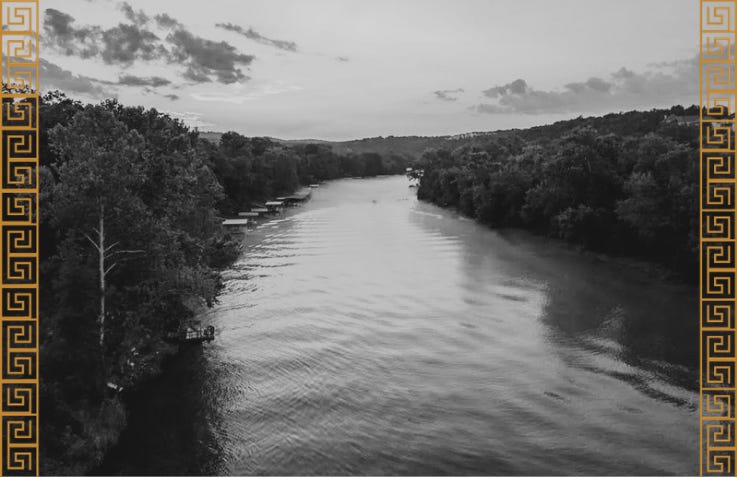

In the lead-up to the 250th anniversary of the United States, Americans are reflecting on the landscapes, cultures, and stories that define the nation. While the National Park System preserves iconic natural wonders - from the Grand Canyon to the Great Smoky Mountains - many culturally significant places that capture the American experience remain underrecognized. As President Theodore Roosevelt, a leading architect of America’s conservation movement, observed, “There is nothing so American as our national parks,” a reminder that our shared heritage extends beyond scenery to the stories and traditions that shape national identity.
Designating Shepherd of the Hills State Park, Henning Conservation Area, and the Shepherd of the Hills Outdoor Drama Amphitheater as a National Historic Landmark District (NHLD) would preserve this culturally significant Ozarks landscape while expanding recreation and heritage tourism. Under federal policy, NHLDs are designated by the Secretary of the Interior, acting through the National Park Service (NPS), pursuant to the Historic Sites Act of 1935 and implementing regulations at 36 C.F.R. Part 65. This designation is reserved for places of exceptional national significance, particularly where multiple, geographically linked landscapes, structures, and cultural features collectively convey a cohesive and nationally important American story.
The designation process follows a well-established precedent: properties are rigorously evaluated against NHL criteria by NPS experts, reviewed by the National Park System Advisory Board, and ultimately designated by the Secretary of the Interior. A unified NHLD designation for these Ozarks sites aligns squarely with this framework. Together, they form an integrated cultural landscape that preserves the legacy and story of The Shepherd of the Hills, a literature work that has profoundly shaped national perceptions of the Ozarks and rural American life.
Such designation would elevate the Ozark’s role in American cultural identity while supporting sustainable economic growth through heritage tourism. Few places more fully capture the intersection of American literature, frontier settlement, and enduring rural traditions. Its importance has long been recognized, including through Congressman James F. Fulbright’s introduction of H.R. 11477 to establish “The Shepherd of the Hills National Park” near Branson, Missouri.
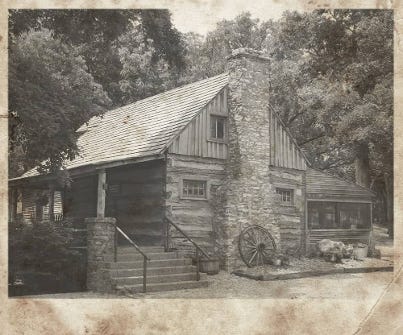
A Landscape that Shaped American Culture
Wright, a Christian minister suffering from tuberculosis, traveled to the Ozarks in the late 19th century seeking recovery and solitude. What he found instead was inspiration. Living roughly eleven years among the people of the Roark Valley near present-day Branson, Wright observed the rhythms of Ozark life. This included their faith, hardships, humor, rugged individualism, and deep sense of community.
Harold Bell Wright began his writing career as a form of Christian ministry. Largely self-taught and educated only through the equivalent of middle school, he developed his storytelling ability through extensive reading and personal determination, producing novels that blended moral themes with suspenseful narratives appealing to general audiences. His works often reflected the ideals of the Social Gospel, emphasizing helping others and the common good over theological debate, with churches portrayed as community centers that uplift people in the present. Although immensely popular with readers, Wright’s Christian-influenced fiction was frequently dismissed by mainstream literary critics of his time as overly moralistic and simplistic (a rejection of his Christian faith).
These experiences formed the foundation for The Shepherd of the Hills, a story of redemption, mystery, and love set in the rugged hills and hollers of the region. The novel centers on Dan Howitt, a mysterious “shepherd” who arrives in the Ozarks carrying secrets from his past and becomes a moral guide to the local community.
The book became a cultural phenomenon. It was the first American novel to sell more than one million copies, bringing national attention to a region that had long been isolated and misunderstood. Readers across the country were captivated by the Ozark landscape and the authenticity of its people.
In doing so, Wright put the Ozarks on the national map.
The Birth of Ozark Tourism
The influence of The Shepherd of the Hills extended far beyond literature. The novel ignited a tourism movement that reshaped Missouri’s Ozarks, especially Laketown Branson, Missouri.
Travelers began arriving in the early 20th century to see the landscapes described in Wright’s book: Mutton Hollow, Inspiration Point, and the Roark Valley. Over time, the site where Wright stayed became preserved as the Shepherd of the Hills Homestead, now home to the famous outdoor drama that has been performed since the 1960s and an adventure park with ziplines, a mountain coaster, and suspension bridges.
This place carries deep personal and historical meaning for me. My grandmother (my Granny) and grandfather (my Papa) moved from Illinois to Branson, Missouri, with their daughters, including my mother and aunts, where they operated a small motel called Shepherd of the Hills Court. From 1964 to 1988, he also performed in the outdoor drama The Shepherd of the Hills, portraying Doc Coughlan - the Shepherd’s old friend and physician from Chicago - bringing warmth and well-timed humor to the role. I later graduated from Branson High School, and my first job at sixteen was working as an usher and bus greeter at the IMAX Entertainment Complex, an early connection to the tourism economy that grew out of the legacy of The Shepherd of the Hills. (Disclosure: My cousin, Jeff D. Johnson, is part owner and general manager of the Shepherd of the Hills attraction, though the views expressed here are my own.)
Today, the surrounding area includes major destinations such as Silver Dollar City theme park; Big Cedar Lodge, a wilderness resort with several golf courses; and the entertainment district of Branson, a tourism economy that owes much of its origin story to Wright’s novel.
The Ozarks’ national recognition began not with entertainment venues, but with The Shepherd of the Hills, a novel that told the story of ordinary Americans in the hills. Designating the landscapes it immortalized as a NHLD would formally recognize and preserve this unique American cultural legacy and recognize the settlers that founded this community.
An Undeveloped Treasure in the Ozarks
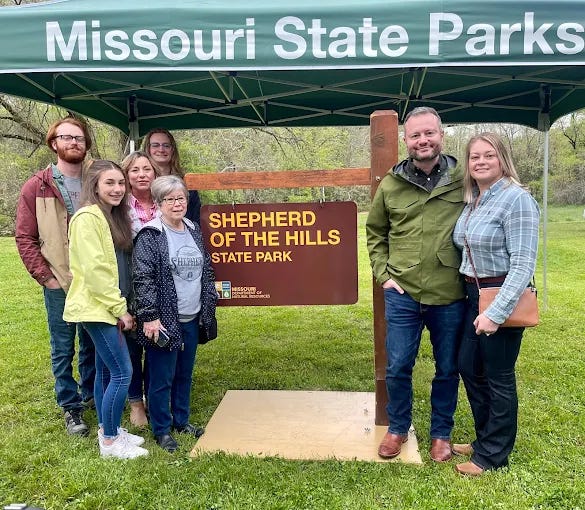
In 2022, Missouri state officials unveiled the sign renaming the property Shepherd of the Hills State Park in Branson, honoring Wright’s novel. The 1,011-acre park in Taney County, located in the Roark Creek valley and bordering the Ruth and Paul Henning Conservation Area, preserves historic landmarks such as the 1903 Garber Schoolhouse along with glades, woodlands, and more than two miles of Roark Creek.
Though currently undeveloped and closed pending future planning, the site holds tremendous potential as a recreation and heritage destination. Federal recognition could support investments in campgrounds and rustic cabins, hiking and biking trails along Roark Creek, birdwatching areas, interpretive trails on Ozark settlement, and river access for fishing and ecological education. Such development would not commercialize the landscape but preserve it while making it accessible to families, students, and visitors seeking an authentic Ozarks experience.
The Forgotten Story of the Ozark Settlers
Beyond literature and scenery, the Shepherd of the Hills landscape preserves the history of a community that once thrived along Roark Creek. Human presence in the region dates back at least 6,000 years, but the most visible historical footprint comes from the homesteaders who settled the valley in the late 19th century. This includes Joel Garber, a preacher who received a land patent in 1895 and helped establish the settlement that became the town of Garber. Other settlers, including William Fronabarger, who operated one of the area’s first stores and donated land for a schoolhouse, helped build the foundations of rural life, with agriculture centered on crops, livestock, and timber. The early-1900s Garber Schoolhouse, which still stands within the park boundaries, remains a tangible reminder of this frontier community and the families who sought opportunity and independence in the Ozark hills.
Yet the culture of these Ozark settlers (working-class farmers, preachers, and craftsmen) has often been overlooked or caricatured by more cosmopolitan narratives of American history. Preserving the geographic area quoted in the Shepherd of the Hills as a NHLD would help restore balance by recognizing the dignity and contributions of rural Americans whose lives helped shape the nation’s interior. As the United States approaches its 250th anniversary, the moment invites reflection not only on landscapes but on the communities and traditions that form the American identity.
Shepherd of the Hills tells a distinctly American story: a Christian minister seeking healing who found inspiration in the Ozarks, a novel that captured the imagination of millions, and a community of settlers whose lives reflected the resilience and moral character of the American heartland. A NHLD recognition would honor both national and local culture; the traditions and communities that together form the American mosaic. Just as the National Park Service preserves Appalachian heritage in places like Great Smoky Mountains National Park, the Ozarks and its people deserve similar recognition.
For generations, the Ozarks have symbolized a uniquely American blend of independence, faith, resilience, and connection to the land. Harold Bell Wright captured that spirit in The Shepherd of the Hills, and the landscapes that inspired his story still exist along Roark Creek and the hills above Branson. Without recognition and preservation, however, the cultural meaning of these places risks fading. Designating Shepherd of the Hills State Park, Henning Conservation Area, and the Shepherd of the Hills Outdoor Drama Amphitheater, the geographic area honored in the Shepherd of the Hills, as a NHLD would ensure that the story of the Ozarks, and the people who shaped them, remains part of the national narrative.
As the United States approaches its 250th anniversary, preserving the landscapes of the Ozarks would send an important message: America’s story belongs not only to its cities and monuments, but also to its hills, hollers, and rural communities. The Ozarks helped shape the American imagination and reflect the enduring character of the nation’s heartland.
As Theodore Roosevelt observed, conservation should serve “the greatest good for the greatest number for the longest time.”
It is time the nation recognized and preserved that legacy.
Scott Winton is a 16-year U.S. Foreign Service Officer, a Latin Americanist, and Spanish speaker currently serving as Senior Labor Advisor at the U.S. Department of State. A first-generation college graduate, he was born and raised in Branson in Missouri’s Ozark Mountains. The views expressed are my own and do not necessarily reflect those of the U.S. Department of State or the United States Government.
Photos: All photos are courtesy of Shepherd of the Hills website:
https://theshepherdofthehills.com/
 | A guest post by
|