

Enforce the Oath of Allegiance Again
While the federal government cannot presently ban citizenship, it can make it harder for new immigrants to remain loyal to foreign nations.
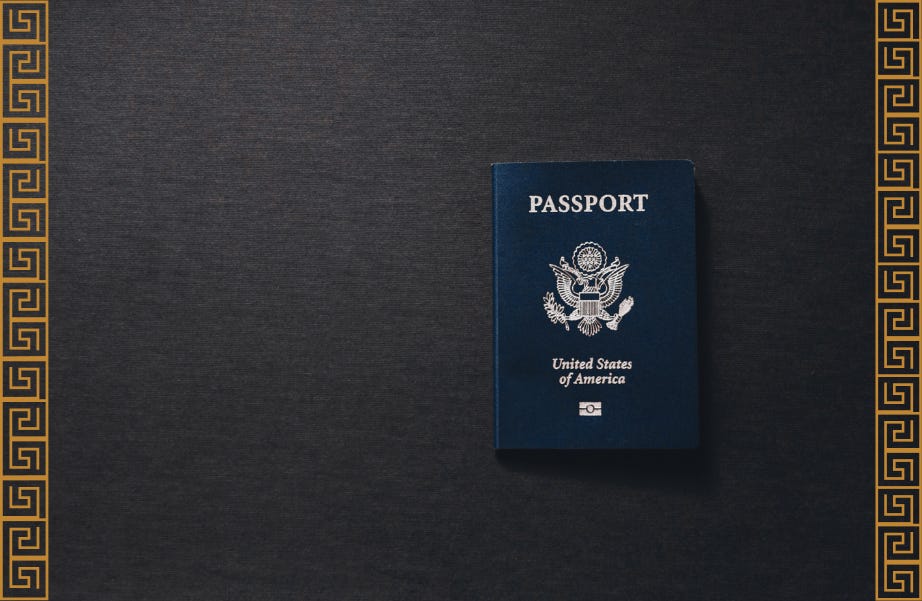
Most individuals born in the United States are citizens. A few others, born abroad to American parents, acquire citizenship through application. For those not lucky enough to be born in the United States or to an American parent, the only pathway to citizenship is naturalization. And the culmination of the naturalization process is the Oath of Allegiance.
An important but today too often ignored part of that oath is the requirement that foreigners abandon all other citizenship before becoming American. Unfortunately, this aspect of the naturalization process has been muted by voices intent on celebrating dual citizenship. They’re wrong. The oath is right. We need to start enforcing again the requirement that new citizens abandon their loyalty to other countries.
The Constitution vests Congress with the authority to establish a “uniform Rule of Naturalization.” An oath has been part of that process since 1790, when the first law establishing naturalization rules required applicants “to support the Constitution of the United States.” Five years later, Congress added a requirement that aspiring citizens “renounce forever all allegiance and fidelity to foreign prince, potentate, state or sovereignty… whereof such alien may, at the time, be a citizen or subject.” The statute did not stipulate the exact text of such an oath though. That improvement occurred in 1929, when naturalization regulations first required applicants to swear expressly:
I hereby declare, on oath, that I absolutely and entirely renounce and abjure all allegiance and fidelity to any foreign prince, potentate, State, or sovereignty, and particularly to __________ of who (which) I have heretofore been a subject (or citizen)...
This text remains in effect today. Put simply: when you naturalize and become American, at that moment you are only American. Any prior citizenship is gone. A newly naturalized America is not a dual citizen.
Such a rejection of dual citizenship was part of an early 20th century push for assimilation. Approximately 10 million immigrants entered the United States during the first decade of the last century, reaching a percentage of the population not seen again until the present immigration crisis. The majority arrived from Southern and Eastern Europe, which previously had not been major sources of immigrants. To make these foreigners American, the aptly named Americanization Movement emerged, spurring nationwide initiatives to instruct immigrants about the traditions of the United States. Churches, schools, and civic institutions promoted learning English, patriotism, the Pledge of Allegiance, and other American customs. Woodrow Wilson issued a presidential proclamation in 1907 heralding Flag Day. Constitution Day, also called “Citizenship Day” and in some locations “I Am An American Day,” emerged during the same period. Throughout this era of mass inculcation of foreigners into the ways of the United States, dual citizenship was shunned by Americans across the country. This included by the federal government, where the assertion of dual citizenship while residing abroad, by joining a foreign military, and in other cases, was proscribed by law.
But in 1967 the Supreme Court decided in Afroyim v. Rusk that the government had no authority to terminate the citizenship of an American who voted in a foreign election. The only action that could amount to expatriation of a U.S. citizen, wrote Justice Black, was “voluntary relinquishment.” This holding effectively legalized dual citizenship. It did not, however, affect the Oath of Allegiance. Afroyim and subsequent holdings applied only to citizens, not aspiring citizens.
Legally, despite the best efforts of dual citizenship apologists, the Oath of Allegiance endures. But the part of the oath that new Americans abandon their prior citizenship is nearly forgotten. This should be reversed. The Trump Administration has led efforts to correct the damage of decades of unchecked immigration. It should extend those efforts to reinvigorating the oath, particularly the mandate to abandon citizenship in other countries.
A good start would be to correct official language surrounding the Oath of Allegiance.
Current State Department guidance, for example, not only informs foreigners that they can naturalize “as a U.S. citizen while keeping the nationality of another country” but also that “dual nationality has advantages.” This language, cheerleading dual citizenship, should immediately be removed from State’s website. The same should occur at USA.gov, the official website of the federal government. America’s homepage provides a “How to get dual citizenship or nationality” guide, including a list of foreign embassies and consulates to contact for advice. The USCIS product “10 Steps to Naturalization“ also needs correction. That site shares how potential Americans can get an exemption from the English and civics test for naturalization, but mentions the Oath of Allegiance only in passing. The text of the oath is not offered, or the fact that it obligates abandonment of foreign citizenship.
This deliberate downplaying of the Oath of Allegiance must be corrected. Instead, the policy of the U.S. government should be neutrality and frankness on the subject of dual citizenship. Existing language encouraging dual citizenship should be replaced with an emphatic “Naturalization requires the immediate and complete abandonment of all foreign citizenship and nationality” and “Acquiring dual citizenship or nationality in a foreign country can complicate foreign travel, tax obligations, as well as eligibility for federal and other employment.”
The federal government cannot presently ban dual citizenship. Other countries can always claim a prior citizen remains a citizen, even after American naturalization. But the United States government, at least, doesn’t have to play along – nor should it.
And unlike the federal government, the public need not be neutral about dual citizenship. Like most problems, government action alone is not the sole solution. Some of the societal concerns that inspired the Oath of Allegiance should be resurrected. Most discrimination based upon national origin is illegal. But insisting aspiring Americans adhere to the law requiring an abandonment of foreign citizenship is reasonable.
The Oath of Allegiance must be enforced, both publicly and privately. We must change dual citizenship-encouraging regulations immediately. Additionally, the Oath of Allegiance should be promoted in general political discourse. The government and the public at large should embrace the ethos of a century ago and urge new citizens to assimilate. For a guide, those new Americans can look to the oath they took when naturalizing. Supporting the Constitution and relinquishing loyalty to other countries is the foundation of good citizenship. We should cheer the Oath of Allegiance again, and the great Americans it helps create.

Nick Pietrowicz is the Deputy Chief of Mission at the U.S. Embassy in Moldova. A career member of the Foreign Service, He is an alumnus of the University of Pittsburgh and Temple University’s School of Law and was a State Department fellow at the Institute of World Politics in 2021.
 | A guest post by
|