

America First Antitrust
Remarks of Commissioner Mark R. Meador at the Bull Moose Institute
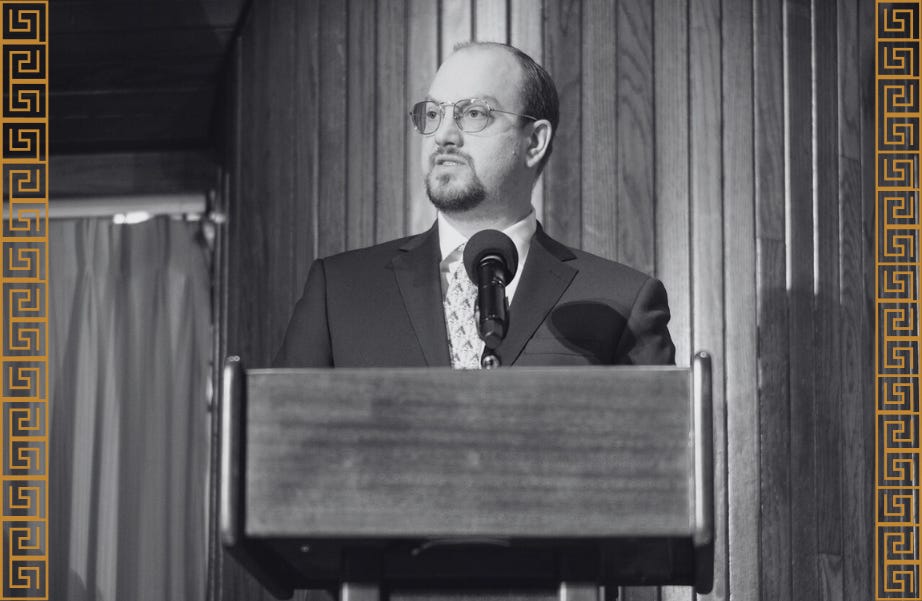
The following speech was delivered by FTC Commissioner Mark Meador at the Bull Moose Institute/s America First Antitrust Forum on March 19, 2026.

Thank you to the Bull Moose Institute for inviting me to speak with you today. It is an honor to be in a room filled with people who believe, as you do, that America’s future is strengthened by creating conditions for American families and workers to thrive.
Your mission—to relentlessly advocate for a dominant American future—echoes the spirit of a man who refused to accept decline, who championed a muscular American nationalism that put our country’s interests first, and who fought to preserve free and fair competition: Theodore Roosevelt. He understood that a dominant American future requires strong American institutions. It is in that same spirit that I speak before you today.
More than a century ago, Roosevelt stood before a crowd in Osawatomie, Kansas, and delivered one of the most important speeches in American political history. He called it “The New Nationalism.”1 He was speaking to veterans of the Civil War, men who had bled for the Union, and he told them that their sacrifice would be wasted unless a new generation rose to fight new battles.
In doing so, he spoke not only of battles with rifles and cannons; he spoke of battles of law, of commerce, and of political will. As he put it, “[t]he essence of any struggle for healthy liberty has always been, and must always be, to take from some one man or class of men the right to enjoy power, or wealth, or position, or immunity, which has not been earned by service to his or their fellows.”2
An America First antitrust policy should pick up from where Roosevelt began: with the recognition that markets have moral content. A free market, as that term has been used in the American tradition, comes from a nation’s commitment to justice in economic life. And justice, as Roosevelt understood it, has a concrete meaning: that each individual should be free to produce, trade, and succeed on his own merits. That commitment—to earned success and equality of opportunity under the law—is what defines free and fair competition. And it is what has allowed America to build the most productive and innovative economy in human history.
An American First vision of antitrust recognizes that economic competition and free enterprise are fundamental to our national interest.3 Our way of life was built on the values of capitalism, as embodied in our common law tradition that sought to preserve principles such as freedom of contract, voluntary exchange, good faith dealing, informed choice, and the ability to pursue different trades.4
We must recognize, however, that these values are not self-sustaining. It requires us to return to our common law roots and make a clear and conscious political choice: to be steadfast in safeguarding our free market system through law enforcement.5
We cannot shape our economic future if we are unwilling to say plainly what the law requires, and to enforce it. The antitrust laws exist to safeguard the economic liberty of American citizens.6 Enforcing these laws promotes the national interest by targeting accumulations and abuses of economic power—whether by private actors who evade competition through collusion or exclusion, or by firms that conscript government process as a competitive weapon against their rivals.
Roosevelt understood this challenge with a clarity many have lost.
He did not oppose the great trusts of his era merely because paid consultants told him that consumer prices would fall if he did so. He opposed them because they acted in ways that corrupted free markets: by replacing competition with coercion, earned success with entrenched privilege, and open markets with corporatism. He drew a line, and the line was legal and moral before it was economic. As he stated, with characteristic directness: “[w]e draw the line against misconduct, not against wealth.”7
Roosevelt admired great enterprise and industrial strength. He spoke with high regard of men who built railroads, steel mills, and factories that transformed a continent. What he opposed was unearned advantage and special privileges—power secured through coercion, through deception, through manipulation of public authority, and through structural arrangements that denied others the opportunity to fairly compete.
U.S. competition policy should adhere to this approach. It should serve American consumers, American workers, and American innovators. It should support and preserve our domestic productive capacity. It should prevent the abuse of government process as a competitive weapon. And it should ensure that the rules of trade and commerce reflect the values of capitalism.8
An America First antitrust policy should therefore adhere to a simple proposition: the American national interest in free enterprise and economic competition is the guiding star for law enforcement.
The Moral Content of Markets
To say that markets have moral content is not to claim that market outcomes are always just or that anything that emerges from the market automatically deserves deference. The claim is narrower: that the process of free exchange is itself a legitimate expression of agency. When parties bargain openly and voluntarily, they form relationships on terms they have chosen. That process has moral standing and advances human flourishing.
But this process retains that standing only if the choices involved are genuinely free and informed. Antitrust law, properly understood, targets conduct that systematically undermines these choices—including forms of coercion that suppress rivalry, unduly restrict alternatives, or deny individuals the ability to use and enjoy their property.9 Collusion, exclusion, and the strategic abuse of government processes are objectionable not only because of downstream price and output effects, but because they represent an abuse of power and the use of force in the economic sphere. As Justice Brandeis framed it: “[t]he illegality of a combination under the Sherman Law lies not in its effect upon the price level, but in the coercion thereby effected. It is the limitation of freedom . . . which constitutes the unlawful restraint.”10
The core task of antitrust enforcement and adjudication, then, is to distinguish competition on the merits from coercion. Competition on the merits occurs when companies strive to improve products, lower costs, innovate, and better serve consumers. Coercion involves efforts to foreclose and control consumer access to rivals, manipulate institutional processes to entrench dominance, and deceive consumers about the nature of competition and available alternatives.
Roosevelt captured this principle when he asserted that the “true friend of property” insists that “property shall be the servant and not the master of the commonwealth.”11 Property earned through value creation and open competition is legitimate. Property acquired or maintained through the suppression of competition is of a different moral character and is an appropriate target for law enforcement.
We saw a textbook example of this distinction in the Commission’s recent action against Edwards Lifesciences. Edwards proposed acquiring JenaValve and JC Medical—the only two companies with active clinical trials for a revolutionary heart valve treatment. Executed over two days, the transactions would have placed the only two realistic paths to market under a single incumbent.
Against the theoretical arguments the parties put forward about saving lives and their postmerger innovation incentives, consider what Edwards’s senior leadership actually said. In its internal strategy documents, it identified JenaValve as a key “competitive threat” and raised concerns about it “gaining momentum.”12 And in a deposition, a senior executive described the company’s strategy as “we were just going to be a fat kid at the pie store and we were just going to take them both.”13 That is not the language of value creation and production. It is the language of appetite—of a dominant incumbent looking at the competitive landscape and deciding to consume it instead of competing within it. That Edwards’s arguments were pretextual was further confirmed by concerns raised by JenaValve executives, who opined that Edwards acted in “bad faith” and “conceal[ed]”14 its effort to simultaneously acquire JC Medical in order to cut a better deal for itself—all at the expense of JenaValve and patients with heart disease.
Whereas some FTC Commissioners in the past were willing to defer to theoretical economic arguments and self-serving public statements,15 this FTC takes executives at their word— especially when bad faith is involved. When trying to identify misconduct, the first place we should look is the parties’ documents, market participant testimony, and complaints from trading partners. This evidence is the primary foundation upon which any economic claims should be considered.
Affordability and Labor Markets
When we talk about putting American citizens at the center of our enforcement agenda, affordability is a natural lens through which to view our approach. When core goods—such as housing, healthcare, energy, and food—become more expensive in ways that cannot be explained by innovation or genuine improvements in quality, that tells us something about whether competition is working.
The antitrust laws do not exist to myopically guarantee cheap goods and purportedly free products without consideration of what the resulting harms mean for competition and American communities more generally. At the same time, when Americans citizens experience a higher cost of living and reduced optionality in their everyday lives, these experiences provide enforcers with signals about where economic abuses are likely to arise and whether firms are likely to have market power.
Of course, as demonstrated by our active merger enforcement program, our matters span across all industries, including housing, healthcare, energy, and consumer goods. But an affordability agenda includes another fundamental component of the economy that, in the past, had been overlooked in antitrust circles: labor markets.
The promise of free markets belongs to the nurse, the machinist, and the security guard as much as it does to the entrepreneur. As Roosevelt noted, quoting Abraham Lincoln, “[c]apital is only the fruit of labor, and could never have existed if labor had not first existed.”16 Yet that promise is often broken through the quiet proliferation of different forms of contractual coercion, including with respect to the use of noncompete agreements.
On this front, I want to commend Chairman Ferguson for addressing this issue with clarity and his decision last year to launch the Joint Labor Task Force.17 Under his leadership, the Commission has moved away from a categorical, “one-size-fits-all” regulatory approach that was taken by the last administration, which threatened to ban the use of even limited non-compete arrangements that could be demonstrated to support investment in employee training or ensure protection of trade secrets. Instead, this Administration has adopted an evidence-based enforcement approach, which allows us to focus scarce resources on real, documented abuses without chilling legitimate business activity or making it harder for American workers to work for small and medium size businesses, or even start their own business.
For example, we recently took action against Gateway Services, the largest pet cremation company in the US, that subjected nearly 1,800 employees—including hourly laborers—to noncompetes regardless of skill level, and which lasted up to one year after these employees had already left the company.18 We likewise took action against Adamas Amenity Services, one of the leading building service contractors in the Northeast, which broadly instituted no-hire agreements that applied to janitors and front desk workers, preventing them from being hired directly by the very buildings where they worked.19
These workers were not holding trade secrets. They were people doing honest work, held in place by contractual coercion dressed up as boilerplate business practice. Dominant firms that try to lock up their workforce in long-term arrangements and threaten litigation against those who cannot afford to defend themselves has long been understood in our common law tradition to be a form of market misconduct that unreasonably restrains trade.
As I have stated before, tackling affordability means taking on both demand and supply side issues. And when it comes to labor restrictions that reduce labor mobility, we have not hesitated to hold companies accountable.
Invisible Government
There is another dimension of market misconduct that Roosevelt identified, which has also been an important focus of the Commission over the past year. The corruption of free markets does not happen only through market-based transactions. It happens—perhaps more durably—through the abuse of government process. “Behind the ostensible government,” Roosevelt warned, “sits enthroned an invisible government owing no allegiance and acknowledging no responsibility to the people.”20 And in setting forward the principles of New Nationalism, he explained, “[t]here must remain no neutral ground to serve as a refuge for lawbreakers, and especially for lawbreakers of great wealth, who can hire the vulpine legal cunning which will teach them how to avoid both jurisdictions.”21
Unfortunately, many concentrations of economic power in our time are not the result of firms outcompeting their rivals on the merits. Instead, dominant firms oftentimes deploy their resources to define the regulatory environment in which they operate—to capture the agencies meant to police them, to write the rules of their own industries through lobbying, and to populate think tanks and academia that put out so-called “thought pieces” to support these same efforts. In effect, these firms conscript regulators and government process to pursue anticompetitive ends. And in the last administration in particular, broader social policy goals, like DEI and ESG, were broadly used to provide cover for firms to engage in exactly this kind of behavior.
The Commission’s investigation of the Clean Truck Partnership provides a textbook illustration of this dynamic. Four companies controlling approximately ninety-nine percent of the American heavy-duty truck market entered into a single agreement with California’s Air Resources Board, committing to abide by emissions regulations—and, critically, committing to maintain output restrictions irrespective of the outcome of any litigation challenging CARB’s legal authority to impose them.22 Even if these emission regulations were to be repealed by people of California through the legislature or invalidated by a court, the terms of the agreement would have remained in effect. Essentially, regulatory authority was laundered through a private agreement in coordination with state officials outside any politically accountable process.
CARB’s regulatory overreach, however, did not go unanswered. President Trump signed legislation revoking CARB’s EPA waivers, and the Commission moved swiftly to investigate and secure written commitments from all four manufacturers—backed by reporting and disclosure obligations—that the Clean Truck Partnership is unenforceable, that no participant would attempt to enforce its terms against a competitor, and that no participant would enter into a similar arrangement with any state regulator in the future.23 The result is that the invisible government, in this instance, was dismantled.
Closing Thoughts
Roosevelt closed his Osawatomie speech by insisting that the national interest can only be achieved by citizens who have strong moral character and possess qualities such as honesty, integrity, and conscientiousness.24 The same is true with respect to economic power. We as a country have always celebrated business success and ingenuity. But part of that appreciation means insisting on accountability when the line is crossed.
An America First antitrust does not apologize for that scrutiny. It views our common law traditions and a willingness to take decisive action as essential to maintaining public confidence in the American capitalist system. If Americans believe markets are fair, they defend it. If they believe markets are corrupted, they demand correction.
The choice before us is whether we will sustain institutions that align profit with the national interest, or tolerate systems that allow for corporate immunity without contribution or service to that interest.
The Bull Moose legacy calls us to choose the former, and I am proud to be part of an antitrust enforcement team that does as well.
Thank you.

Mark R. Meador was sworn in April 16, 2025 as a Commissioner of the Federal Trade Commission.
Theodore Roosevelt, The New Nationalism (Aug. 31, 1910), reprinted by THEODORE ROOSEVELT ASS’N, https://theodoreroosevelt.org/content.aspx?page_id=22&club_id=991271&module_id=338365.
Id.
See, e.g., FTC v. Phoebe Putney Health Sys., 568 U.S. 216, 225 (2013) (describing “free enterprise and economic competition” as “fundamental national values” “that are embodied in the federal antitrust laws”).
See, e.g., Bus. Elecs. Corp. v. Sharp Elecs. Corp., 485 U.S. 717 (1988) (noting that the Sherman Act “invokes the common law itself, and not merely the static content that the common law had assigned to the term in 1890”); Associated Gen. Contractors v. Cal. State Council of Carpenters, 459 U.S. 519, 531 (1983) (“The repeated references to the common law in the debates that preceded the enactment of the Sherman Act make it clear that Congress intended the Act to be construed in the light of its common-law background.”); Standard Oil Co. v. United States, 221 U.S. 1 (1911) (“The terms ‘restraint of trade,’ and ‘attempts to monopolize,’ as used in the Anti-Trust Act, took their origin in the common law, and were familiar in the law of this country prior to and at the time of the adoption of the act, and their meaning should be sought from the conceptions of both English and American law prior to the passage of the act.”); See 21 CONG. REC. 2456 (1890) (statement of Sen. John Sherman) (The Act “does not announce a new principle of law, but applies old and well-recognized principles of the common law to the complicated jurisdiction of our State and Federal Government.”); 21 CONG. REC. 3152 (1890) (statement of Sen. George Hoar) (“The great thing that [the Sherman Act] does . . . is to extend the common-law principles, which protected fair competition in trade[] [i]n old times in England, to international and interstate commerce”); WILLIAM HOWARD TAFT, THE ANTI-TRUST ACT AND THE SUPREME COURT 3 (1914) (noting that the Sherman Act “was passed in a country which recognizes as controlling the customary law handed down to us from England and known as the common law” and used “general expressions” that were familiar under this same body of law).
N.C. State Bd. of Dental Exam’rs v. FTC, 574 U.S. 494, 502 (2015) (“Federal antitrust law is a central safeguard for the Nation’s free market structures.”).
United States v. Colgate & Co., 250 U.S. 300, 307 (1919) (“The purpose of the Sherman Act is to prohibit monopolies, contracts and combinations which probably would unduly interfere with the free exercise of their rights by those engaged, or who wish to engage, in trade and commerce—in a word to preserve the right of freedom to trade.”).
Theodore Roosevelt, Second Annual Message (Dec. 2, 1902), reprinted by UC SANTA BARBARA: AM. PRESIDENCY PROJECT, https://www.presidency.ucsb.edu/documents/second-annual-message-16.
Standard Oil Co. v. FTC, 340 U.S. 231, 248 (1951) (“The heart of our national economic policy long has been faith in the value of competition.”); N. Secs. Co. v. United States, 193 U.S. 197, 331 (1904) (“Congress has the power to establish rules by which interstate and international commerce shall be governed, and, by the Anti-Trust Act, has prescribed the rule of free competition among those engaged in such commerce”); N. Pac. Railway Co. v. United States, 356 U.S. 1, 4 (1958) (“The Sherman Act was designed to be a comprehensive charter of economic liberty aimed at preserving free and unfettered competition as the rule of trade.”); Organisation for Economic Co-operation and Development [OECD], Working Party No. 2 on Competition and Regulation, Competition Enforcement and Regulatory Alternatives—Note by the United States, at 2, DAF/COMP/WP2/WD(2021)12 (June 7, 2021), https://one.oecd.org/document/DAF/COMP/WP2/WD(2021)12/en/pdf (“Competition through free enterprise and open markets is the organizing principle for the U.S. economy.”).
Associated Gen. Contractors v. Cal. State Council of Carpenters, 459 U.S. 519, 528 (1983) (“Coercive activity that prevents its victims from making free choices between market alternatives is inherently destructive of competitive conditions and may be condemned even without proof of its actual market effect.”).
Am. Column & Lumber Co. v. United States, 257 U.S. 377, 417–18 (1921) (Brandeis, J., dissenting).
Roosevelt, supra note 1.
FTC Opening Statement, Plaintiff’s Demonstrative PDX001 at 4, Federal Trade Commission v. Edwards Lifesciences, 2026 LX 80846 (D.D.C. Jan. 9, 2026), https://www.ftc.gov/system/files/ftc_gov/pdf/EdwardsLifesciences-FTCOpeningStatement.pdf.
Id. at 70.
Id. at 68.
Compare Statement of Chairman Timothy J. Muris at 2–3, 11–15, 23, In re Genzyme Corp./Novazyme Pharmaceuticals Inc. (Fed. Trade Comm’n Jan. 13, 2004), https://www.ftc.gov/system/files/attachments/pressreleases/ftc-closes-its-investigation-genzyme-corporations-2001-acquisition-novazyme-pharmaceuticalsinc./murisgenzymestmt.pdf (endorsing a “cautious” approach to innovation analysis, relying primarily on theoretical analysis about innovation incentives based on party R&D related data, and questioning use of structural evidence including in merger to monopoly cases) with Dissenting Statement of Commissioner Mozelle W. Thompson at 3–6, 9, In re Genzyme Corp./Novazyme Pharmaceuticals Inc. (Fed. Trade Comm’n Jan. 13, 2004), https://www.ftc.gov/system/files/attachments/press-releases/ftc-closes-its-investigation-genzyme-corporations-2001- acquisition-novazyme-pharmaceuticals-inc./thompsongenzymestmt.pdf (explaining how anticompetitive presumption that is applied in merger-to-monopoly cases was grounded in the parties’ own ordinary course and market participant testimony regarding pre-merger projections, acquisition pricing, and changes in schedule associated with the parties R&D programs). Thompson’s statement was cited with approval, CARL SHAPIRO, Did Arrow Hit the Bull’s Eye?, in THE RATE AND DIRECTION OF INVENTIVE ACTIVITY REVISITED 361, 395–98 (Josh Lerner & Scott Stern, eds., 2012) (criticizing Muris for relying on the general theoretical literature on market concentration and innovation rather than analyzing structural market conditions demonstrating the deal was a merger to monopoly, ordinary course information related to the parties’ ongoing R&D rivalry, and post-merger evidence showing that Genzyme had slowed the Novazyme program).
Roosevelt, supra note 1.
Press Release, Fed. Trade Comm’n, FTC Launches Joint Labor Task Force to Protect American Workers (Feb. 26, 2025), https://www.ftc.gov/news-events/news/press-releases/2025/02/ftc-launches-joint-labor-task-force-protectamerican-workers.
Press Release, Fed. Trade Comm’n, FTC Takes Action to Protect Workers from Noncompete Agreements (Sep. 4, 2025), https://www.ftc.gov/news-events/news/press-releases/2025/09/ftc-takes-action-protect-workers-noncompeteagreements.
Press Release, Fed. Trade Comm’n, FTC Continues Enforcement Action Streak Against Anticompetitive No-Hire Agreements (Dec. 19, 2025), https://www.ftc.gov/news-events/news/press-releases/2025/12/ftc-continuesenforcement-action-streak-against-anticompetitive-no-hire-agreements.
THEODORE ROOSEVELT, Progressive Covenant with the People (Cylinder Recording, Edison Co. Aug. 1912), https://www.loc.gov/collections/theodore-roosevelt-films/articles-and-essays/sound-recordings-of-theodoreroosevelts-voice/#pcp (transcript available at the Library of Congress).
Roosevelt, supra note 1.
Press Release, Fed. Trade Comm’n, FTC Resolves Antitrust Concerns Arising from Clean Truck Partnership (Aug. 12, 2025), https://www.ftc.gov/news-events/news/press-releases/2025/08/ftc-resolves-antitrust-concernsarising-clean-truck-partnership.
Id.
See Roosevelt, supra note 1.